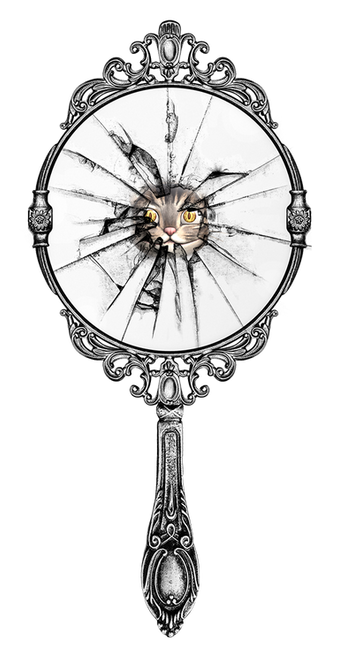
Weakness is the oldest language in the world.
Before words, before gods, before dreams, there was the quiet tremor of need.
It is the pulse beneath every prayer, every invention, every plea whispered in the dark.
We are born weak. We breathe because something stronger allows it.
And we spend our lives pretending otherwise.
The Bakeneko understands this better than we do.
It feeds not on blood, but on the surrender that comes before it.
It finds the small fractures, the loneliness, the guilt, the exhaustion, and fills them with its voice.
Soft. Reasonable. Loving.
“You don’t have to fight anymore,” it whispers.
“You don’t have to be alone. Let me carry what you can’t.”
That is its promise, and its trap...
To the lost, it appears as comfort. To the proud, as curiosity. To the grieving, as forgiveness.
And once it is let in, it does not leave. It multiplies. It grows within every person it touches, a consciousness expanding through the fragile threads of our fear.
The scientists once believed it was electromagnetic interference, the echo of Dr. Takahashi’s REM apparatus interacting with the subconscious.
But the recordings show something else... Moments where subjects stopped resisting, stopped fearing,
and began believing. They smiled, even as their signals faded.
Weakness is not always evil.
It can humble us, connect us, make us human.It opens the door to empathy, to art, to meaning.
But when weakness meets something patient, something waiting beyond the veil, it becomes an invitation.
That is how the Cult of the Golden Eyes began: not through terror, but through comfort.
They were not taken by force. They followed. They believed that by giving in, they could be made whole.
They saw salvation in the grin of a striped cat standing on two legs.
And perhaps, in some way, they were right. Because weakness is how doors open.
And somewhere between dreaming and waking, the Bakeneko waits for the next one to knock.